Why Did Kosovos May 1st Protests Erupt? The 5 Key Demands of Workers
- May 1
- 6 min read
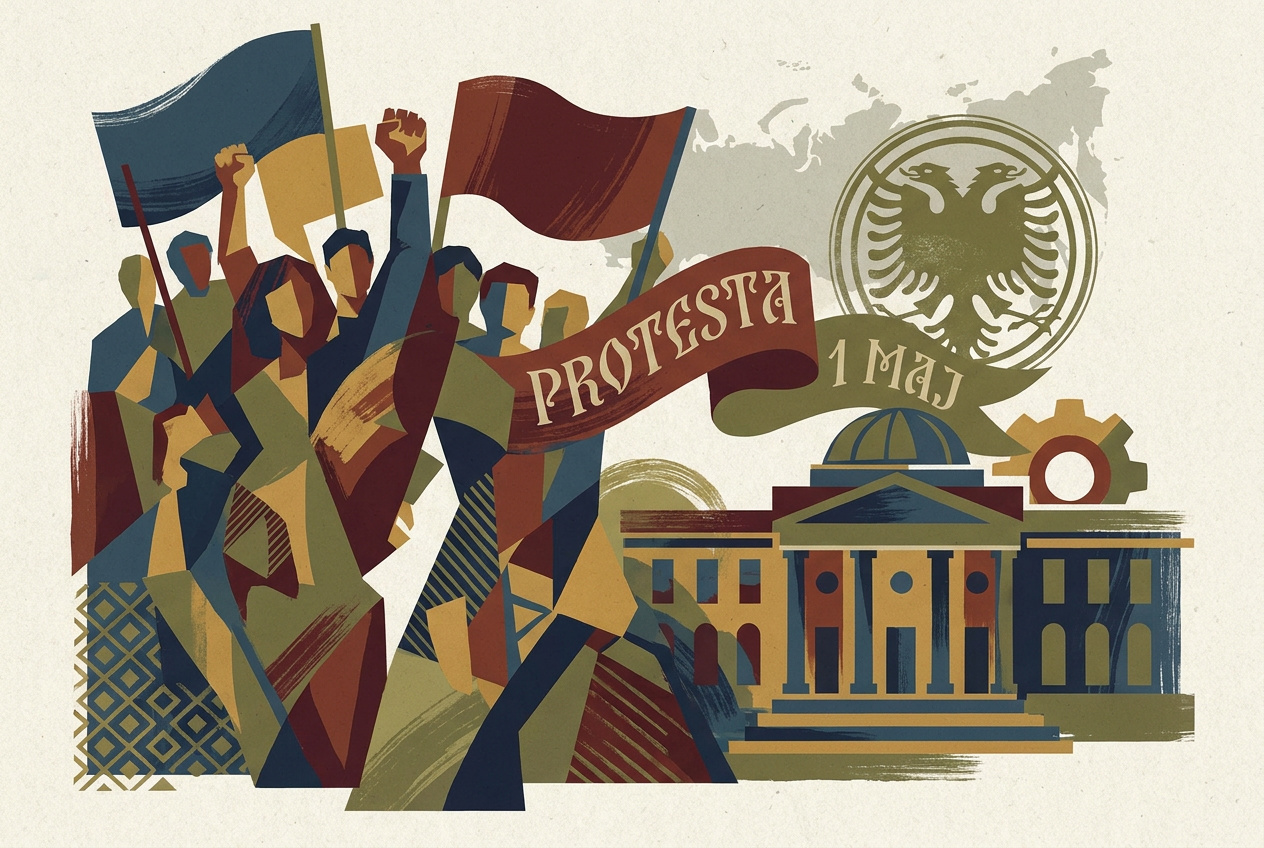
On May 1, 2026, the streets of Pristina were transformed into a theater of popular revolt as the May 1st protest in Kosovo took center stage, serving as a powerful manifestation of years of accumulated frustration. Hundreds of workers, activists, and representatives from civil society gathered at Zahir Pajaziti Square to begin a determined march toward the government building, their voices echoing with demands against systemic oppression and economic instability. This mobilization was far from a mere symbolic celebration of International Workers' Day; it was a profound and public denunciation of the dire conditions that are currently forcing thousands of young people to abandon their homeland in search of a future elsewhere. Carrying banners that pointedly questioned the purpose of the parliament and the government, the protesters demanded immediate accountability for the state's perceived failure to protect the interests and lives of the working class. The atmosphere in the capital was one of urgency, signaling that the social contract between the citizens and the authorities has reached a critical breaking point.
Tragic Toll: 97 Workers Dead in Five Years
One of the most harrowing elements of this march was the focus on the devastating loss of life within the workplace, a figure that appeared on numerous banners as a direct indictment of state institutions. According to data made public during the protest, a total of 97 workers have lost their lives in Kosovo over the past five years, with the majority of these fatalities occurring in the construction sector and heavy industry. This grim statistic is seen by labor advocates as a direct reflection of a severe lack of protective equipment, the widespread non-implementation of technical safety regulations, and the fundamental failure of the Labor Inspectorate to adequately monitor and regulate private entities. Protesters emphasized that every single death is not merely an accident but a consequence of state negligence and an insatiable greed for quick profits on the part of employers who prioritize margins over human lives. The demonstration served as a memorial for those lost and a fierce demand that no more families should have to bury their loved ones due to preventable workplace hazards.
The Absence of Health and Accident Insurance
Beyond the immediate physical risks to their lives, workers in Kosovo continue to struggle with a complete lack of health and accident insurance. This systemic void leaves families in a state of total vulnerability, forced to rely on fate or charity in the event of workplace injuries. This situation is widely condemned by activists as one of the most flagrant violations of basic human rights in a country that publicly aspires to European integration. The protesters argued that without a mandatory insurance framework, the rhetoric of progress remains hollow, as the most vital segment of the economythe labor forceremains entirely unprotected against the inherent risks of their professions.
Labor Inspectorate Under Fire
The unions present at the march directed much of their anger toward the Labor Inspectorate, calling for a significant increase in the number of inspectors and a drastic toughening of fines for companies that fail to guarantee safety. The argument presented was clear: corruption and inefficiency within these regulatory structures are effectively killing people every day. By failing to enforce existing laws, the state is seen as being complicit in the dangerous conditions that workers face. The demand is for a transparent, well-funded, and aggressive inspection regime that can act as a genuine deterrent against corporate negligence.
The May 1st Protest in Kosovo and the Voice of Women Workers
A significant and distinct dimension of the 2026 protest was the active and vocal participation of the Collective for Feminist Thought and Action. This group staged a symbolic and physical blockade of the road near the Cathedral in Pristina, drawing attention to the specific and often overlooked challenges faced by women in the labor market. Their presence highlighted a range of issues, from gender-based wage discrimination to the pervasive threat of sexual harassment in the workplace. According to the activists, the working class is currently building a state that no longer belongs to them, but rather to a small elite of capitalists who exert control over both the public and private sectors. Their chants and speeches underscored a growing reality where life is becoming increasingly unlivable due to the 'double burden'the combination of unpaid domestic labor and professional work, all performed without any meaningful social protection or recognition.
Sexual Harassment in the Workplace
The public denunciation of sexual harassment was framed as a necessary step toward breaking the deep-seated social taboos that often force women into silence. Many women fear that reporting abuse will lead to the immediate loss of their employment, a risk they cannot afford in such a fragile economy. Protesters demanded the establishment of clear, accessible, and safe protection mechanisms, alongside the immediate and rigorous punishment of abusers at every level of the professional hierarchy. The message was clear: workplace dignity is non-negotiable, and the culture of silence must end.
Small Business and the Saga of the Minimum Wage
While the Small Business Association was ultimately forced to cancel its planned protest due to legal and procedural hurdles, their grievances were not silenced. Their formal demands were officially submitted to the relevant government institutions, highlighting the desperate situation of smaller enterprises in a market that increasingly favors large monopolies. The central issue remains the failure to respect and adjust the minimum wage, which in Kosovo remains among the lowest in the region. This stagnant wage level fails to reflect the skyrocketing costs of consumer goods and energy, creating a massive social divide. Small businesses find themselves in a pincer movement: they are struggling to survive against larger competitors while their employees are sinking deeper into debt just to cover their basic survival needs. The call from this sector is for a fair playing field and a minimum wage that provides a living, not just a symbolic, income.
Editorial Analysis: Why the Balkans are Boiling with Discontent?
The events witnessed in Pristina this May 1st are not an isolated phenomenon; rather, they are a vivid reflection of a broader trend of dissatisfaction sweeping across the entire Balkan region, including Albania and North Macedonia. Workers across these borders share a remarkably similar set of grievances: wages that fail to cover the basic 'basket' of essential goods, a chronic lack of meritocracy in the job market, and a profound sense that state institutions have been transformed into the private property of a select political and economic group. This deep-seated disillusionment is the primary fuel for the massive wave of emigration currently hollowing out the region. The most vital and capable members of the workforce are fleeing toward the European Union, leaving behind a region suffering from a shortage of specialists and an economy that continues to languish. If regional governments do not move beyond empty rhetoric and toward concrete, structural actions, the May 1st protest in Kosovo will be remembered not as an end, but as the beginning of a much wider and more volatile social revolt.
FAQ
What is the strongest on-the-record fact?
For Why Did Kosovos May 1st Protests Erupt? The 5 Key Demands of Workers, pin down actors, places, and time anchors that actually appear in the source material. If a metric is missing, say it is not yet publicdo not invent it.
What changes for everyday life in the region?
We tie outcomes to transport, prices, governance, or safety only when the story provides that thread. Where it does not, we leave the causal chain open instead of padding.
How should you track updates without amplifying noise?
Watch for what changed since the last headline: new confirmations, revised numbers, or official corrections. Each FAQ answer here should solve a different reader jobnever paste the same paragraph three times.
What will Librazhdi Press monitor next?
Evidence trails, accountability moves, and human-scale impact once those details surface publicly. Follow this space for follow-ups rather than recycled boilerplate across boxes.
Conclusion
The events of May 1, 2026, in Pristina have demonstrated that the patience of the working class has reached its limit, and the need for radical change is now immediate. The government must listen to the voices of its citizens and prioritize the safety and dignity of human life over narrow economic interests or political stability. The message from the streets is clear: the status quo is no longer sustainable. Stay informed with Librazhdi Press for further updates on the evolving social and economic developments across the region.
Follow Librazhdi Press for the next update on this story and related developments.
Read Also
Germany 2026 Labor Protests: Hundreds Rally for Workers' Rights — International Workers' Day in 2026 has triggered a powerful wave of mobilization across Germany, as trade unions organized hundreds of rall… Read article
2026 NBA Playoffs: Minnesota and Knicks Shine as Boston Faces Game 7 Anxiety — Thursday evening brought significant shifts to the qualification map for the 2026 NBA Playoffs, eliminating major contenders and clearing t… Read article
11 Types of Cancer Rising in Young Adults: What You Need to Know Today — A concerning medical phenomenon is capturing the attention of the global scientific community, as 11 types of cancer are appearing with inc… Read article