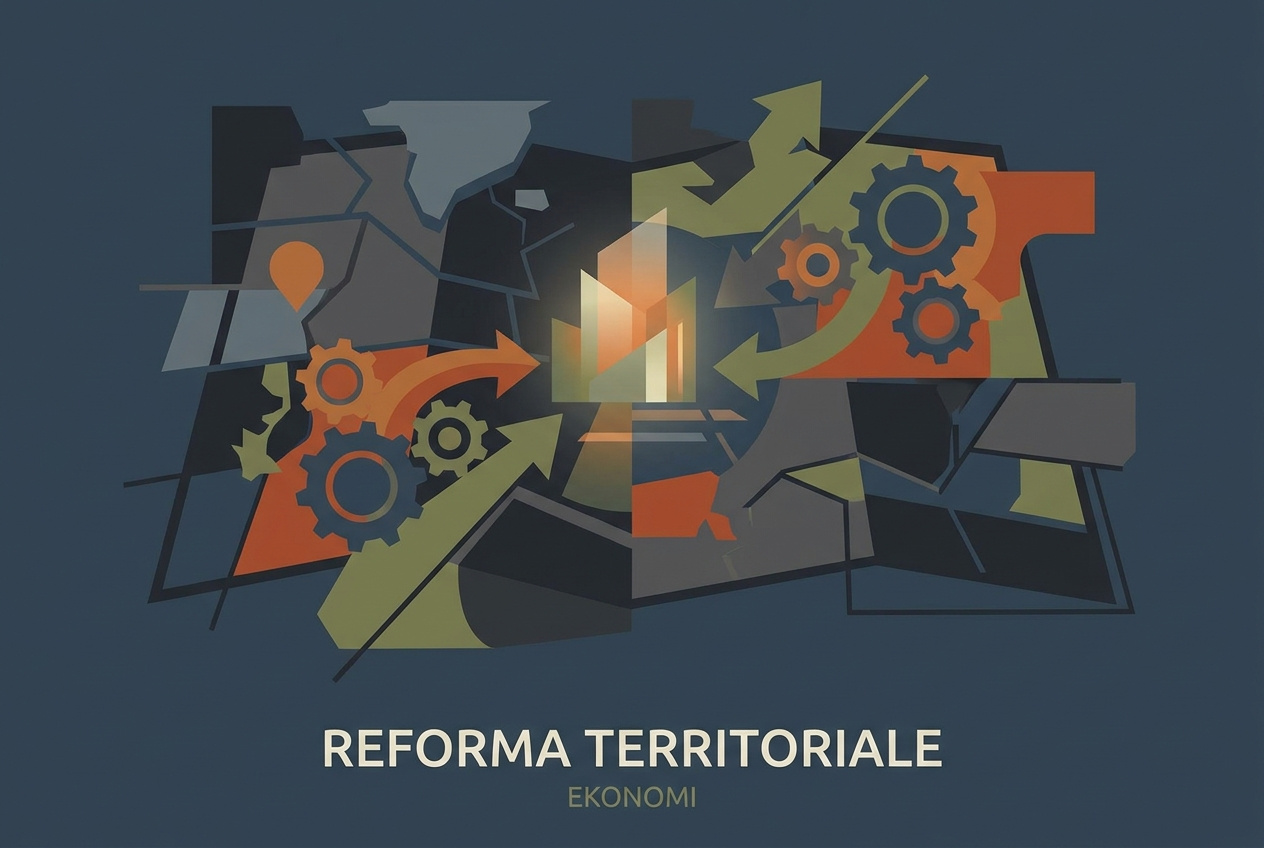
Territorial Reform in Albania: What Needs to Change?
- 5 days ago
- 3 min read
The debate regarding the necessity of reconfiguring Albania's administrative map has reached a critical juncture in 2026. While the 2014 reform aimed for efficiency and cost reduction, today's demographic reality and the public's demand for quality services require an entirely new approach that transcends simple geographical boundary adjustments.
Territorial Reform in Albania and Demographic Challenges
The profound demographic shifts that have characterized the country over the last decade have altered the specific weight of many municipalities. Numerous rural areas have experienced significant population contraction, rendering the administrative structures established in 2014 no longer aligned with the actual needs of residents. This misalignment creates difficulties in urban planning and the provision of basic services, creating a gap between citizen expectations and the capacity of municipalities to respond. Analysis of the situation shows that the concentration of the population in large urban centers has shifted investment needs, leaving entire areas without the infrastructure necessary for sustainable development.
The Impact of Emigration on Municipalities
Persistent emigration has directly affected the tax base of many municipalities, reducing local revenues. This decline in income makes it impossible to finance major projects without continuous assistance from the central government.
Economy and Local Resource Management
Territorial reform cannot remain a cartographic exercise, as its success is measured by the ability to generate economic value. In the context of 2026, municipalities must transform into engines of the local economy, leveraging their unique potential to attract investment. However, many small municipalities still suffer from a lack of technical expertise and administrative capacity to manage funds and projects efficiently. This requires a new model of local finance that encourages inter-municipal cooperation and the creation of economic development zones that transcend current administrative boundaries.
Editorial Perspective: Why the Current Division is Insufficient
In our assessment, the main problem is not simply how the lines are drawn on the map, but how the autonomy of these units is conceived. Many municipalities continue to function as branches of the central administration rather than as autonomous subjects of development. This disguised centralization hinders innovation and fosters a harmful dependency on the state budget. To achieve real change, there must be true decentralization, where municipalities have the legal space to decide on local taxes and to draft strategies that respond to their regional specifics.
The Role of Digitalization
The digitalization of services is a necessity to reduce administrative costs. Municipalities that invest in technology are succeeding in providing faster services, thereby reducing bureaucracy for citizens and businesses.
The Path Toward an Effective Reform
Looking ahead, territorial reform in Albania must be based on accurate data and an open dialogue with local communities. It is not about changing the names of the units, but about changing the way they provide services to citizens. This includes a review of the powers of mayors and a strengthening of municipal councils as decision-making bodies. If there is no intervention with mechanisms that encourage competition between municipalities to attract investors, the risk is that inequality between regions will deepen even further in the coming years.
FAQ
Why is the 2014 territorial reform insufficient today?
The 2014 reform was based on the demographic data of that time, whereas today the reality has changed radically due to population movements and economic shifts.
Does territorial reform affect local taxes?
Yes, an efficient reorganization can optimize resource management and influence how local taxes are collected and spent for community services.
What is the link between reform and economic development?
Territorial reform creates larger and more stable administrative spaces, which are better able to absorb investments and stimulate local business development.
Conclusion
Territorial reform in Albania requires a vision that goes beyond administrative maps, focusing on the empowerment of municipalities and services to citizens. Demographic and economic changes do not wait, so the need for institutional action is greater than ever. Follow us at Librazhdi Press to stay informed on the latest developments affecting our community.
Follow Librazhdi Press for the next update on this story and related developments.
Read Also
Durres Tragedy: State Police Suspend Three Senior Officials — The tragic incident in Durres, which resulted in the loss of two young lives following a severe road accident, has triggered an immediate r… Read article
Tragic Accident in Durres: Security Footage Sheds Light on Fatal Collision — The Sunday afternoon in the Keneta area of Durres turned into a scene of profound grief following a fatal accident that claimed the lives o… Read article
Kategoria e Pare Season Concludes: Final Verdicts Before the Title Showdown — The 2025-2026 season of the Kategoria e Pare has reached its climax, determining the fates of numerous clubs following the conclusion of th… Read article